
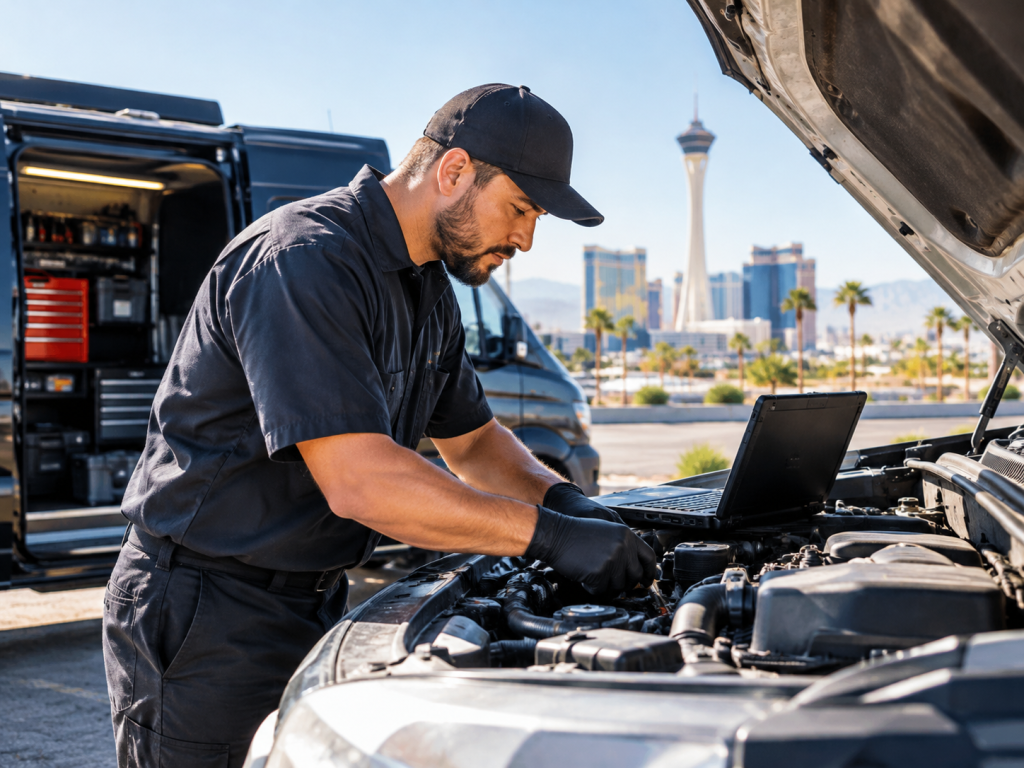
Transmission fluid is one of the most overlooked fluids in your car. Oil gets plenty of attention, and drivers know to check the coolant and the brakes, but the fluid inside the transmission often goes unnoticed until the car starts shifting badly. By then, the damage may already be underway, and transmission repairs are among the most expensive jobs a car can need. This Q&A explains what transmission fluid does, how often it should be changed, which warning signs to watch for, and how a transmission fluid change in Lexington can be handled by a mobile mechanic.
What Does Transmission Fluid Do?
Your transmission is a complex assembly of gears, clutches, bearings, valves, and seals, and the fluid inside does several jobs at once. It lubricates moving parts so they do not grind against each other, carries heat away from the transmission, cleans and suspends tiny particles, and in automatic transmissions it provides the hydraulic pressure that makes the gears shift. In that sense, transmission fluid is both a lubricant and a working part of the system. When it breaks down or runs low, shifting, cooling, and protection all suffer.
Are All Transmission Fluids the Same?
No, and this matters a great deal. Different transmissions need different fluids:
- Conventional automatic transmissions typically use automatic transmission fluid, but there are many specifications
- Continuously variable transmissions use a specialized fluid made for that design
- Dual clutch transmissions often use their own specific fluid
- Manual transmissions may use gear oil or a particular type of transmission fluid, depending on the vehicle
Using the wrong fluid can cause rough shifting, slipping, overheating, and long term damage, even if it looks similar. Your owner’s manual lists the exact specification for your car, and a technician should match it. Universal fluids exist, but they are not always a safe substitute, so check the manual first.
How Often Should Transmission Fluid Be Changed?
There is no single answer, because manufacturers recommend very different intervals. Some call for a change after a set number of miles, some suggest a longer interval under normal driving, and others describe the fluid as filled for life. A fill for life claim does not mean the fluid never wears out. It usually means the manufacturer does not list a routine service in the maintenance schedule, and many technicians still recommend inspecting or changing the fluid at some point, especially as the vehicle ages. The best source for your car is the owner’s manual. If you drive under severe conditions, such as towing, heavy traffic, steep hills, or extreme temperatures, the manual often calls for more frequent service.
Does Driving Around Lexington Change the Schedule?
It can. Rolling hills, rural roads, and long commutes all put extra load on the transmission, because it works harder on climbs and generates more heat. Our article on rolling hills and rural commutes and car care around Lexington covers how this kind of driving affects your car as a whole. If your daily drive includes a lot of hills, towing, or stop and go traffic, it is worth asking a technician whether your fluid should be checked or changed sooner than the standard schedule.
What Are the Signs of Low or Worn Out Transmission Fluid?
- Delayed engagement, where the car hesitates before moving when you shift into drive or reverse
- Slipping, where the engine revs but the car does not accelerate as expected
- Harsh, jerky, or clunking shifts
- Shuddering or vibration at certain speeds
- Whining, humming, or buzzing noises that change with speed or gear
- A burning smell, which can mean the fluid has overheated
- Red or brown fluid leaking under the car
- A transmission or check engine warning light on the dashboard
- The car stuck in one gear or going into a limp mode with reduced power
Any of these symptoms deserves prompt attention. Transmission problems rarely get better on their own, and waiting often turns a small repair into a large one.
How Do I Check My Transmission Fluid?
It depends on the car. Many older and some current vehicles have a transmission dipstick, usually with a brightly colored handle, and the owner’s manual explains the correct procedure, which often involves the engine being warm and running while the car is parked on level ground. Many newer vehicles have a sealed transmission with no dipstick, and the fluid must be checked by a technician using specific tools and procedures, often at a precise temperature. If you are not sure how to check yours, it is best to ask a professional instead of guessing, since an incorrect reading can lead to overfilling or underfilling.
What Should Healthy Fluid Look Like?
Fresh automatic transmission fluid is usually red or pink and fairly clear, though colors vary by product. Fluid that has aged may look darker. Warning signs include:
- Dark brown or black fluid, which can mean it is worn out or has overheated
- A burnt smell
- A milky or pinkish foam, which can indicate coolant has leaked into the transmission, a serious problem
- Metal particles or a gritty feel, which can point to internal wear
- Very low level, which usually means a leak
Color alone does not tell the whole story, so a technician will consider the smell, the level, and the way the car behaves.
What Is the Difference Between a Drain and Fill and a Flush?
These terms are often confused. A drain and fill removes part of the old fluid, typically the amount that collects in the pan, and replaces it with fresh fluid. A fluid exchange or flush uses a machine to push out most of the old fluid and replace it. Each approach has supporters, and which one is best depends on your vehicle, its mileage, and its history. For example, some manufacturers do not recommend machine flushes for certain transmissions, and a high mileage transmission that has never been serviced may call for a cautious approach. A good technician will explain the options and follow the guidance for your specific car.
Is the Filter Replaced Too?
Many transmissions have a filter, either inside the pan or built in, that traps debris. During a more complete service, the technician may drop the pan, clean it, replace the filter and gasket if applicable, and refill with the correct fluid. Some transmissions have no serviceable filter. The service scope depends on the design of your transmission.
Can Old Fluid Cause Transmission Failure?
Yes. Fluid that has lost its protective qualities cannot lubricate or cool properly, and heat is the leading enemy of transmissions. Worn fluid also carries more debris, which can clog passages and wear clutches and valves. Over time, this can lead to slipping, overheating, and eventually failure. Regular fluid service is one of the cheapest ways to protect a major and expensive component.
Can Changing the Fluid Hurt an Old Transmission?
You may have heard that changing the fluid in a high mileage transmission can cause it to fail. The truth is more nuanced. A transmission that has been neglected for a very long time may already be worn, and a fluid service will not repair existing damage, which sometimes makes problems more noticeable. Slipping that appears after a service usually reflects wear that was already there. Still, if your transmission is already showing symptoms, a technician should evaluate it before deciding on the best approach. Using the correct fluid and following the right procedure matters most.
What If the Car Will Not Move or Start?
A car that does not move after being started may have a transmission issue, but other problems can cause similar symptoms. A car that will not start at all is a different situation, and our guide to the top 10 reasons your car won’t start and how to get back on the road covers the more common causes. If the car starts but will not go into gear, avoid forcing it and have it checked.
Can a Mobile Mechanic Change Transmission Fluid?
In many cases, yes. A mobile mechanic can come to your home or workplace in the Lexington area, inspect the fluid and look for leaks, perform a drain and fill, replace the filter where appropriate, and refill with the correct fluid for your vehicle. That saves you a trip to a shop and lets you see the condition of the fluid for yourself. Some jobs, such as sealed transmissions that need special equipment, internal repairs, or transmission replacement, may need a full shop, and a trustworthy technician will tell you honestly when that is the case. When you book, share your vehicle’s year, make, model, and mileage, along with any symptoms you have noticed, so the right fluid is on hand.
A Few Habits That Protect Your Transmission
- Follow the service schedule in your owner’s manual, and ask about severe service intervals if you tow or drive hills
- Use only the fluid your car specifies
- Fix leaks promptly, since low fluid does fast damage
- Avoid hard acceleration while the car is cold
- Come to a full stop before shifting between drive and reverse
- Have the transmission looked at at the first sign of slipping or rough shifting
Do Not Wait for a Warning Light
Transmission fluid is cheap compared with a transmission. Knowing what your car needs, watching for the early signs of trouble, and keeping up with service can add years to its life. If you are not sure when your fluid was last changed, an inspection is a good place to start.
To learn more about our services, visit our homepage. If you have questions about your transmission fluid, reach out through our contact us page and we will come to you anywhere in the Lexington area.