
Living in the Bluegrass region often means a longer commute than you would find in a more compact metro area. Between the horse farms lining routes like Old Frankfort Pike, the rolling hills that define this part of Kentucky, and the reality that many residents live well outside Lexington proper in smaller surrounding communities, a daily drive here frequently covers more distance and more varied road surfaces than a typical city commute. That combination of distance and terrain puts a specific kind of strain on suspension components that rural Lexington area drivers should understand.
Why Rural Bluegrass Commutes Wear Suspension Differently
A city commute tends to involve consistent, paved surfaces with predictable stops and turns. A rural Kentucky commute looks different, often involving narrower two lane roads, gravel shoulders, rougher pavement transitions where county maintenance varies from one stretch to the next, and the constant undulation that comes with driving through genuinely hilly, rolling terrain rather than flat city streets. Each of these factors asks something different from your suspension system than routine city driving would.
The rolling nature of Bluegrass terrain means your suspension is almost constantly compressing and rebounding as the road rises and falls, rather than settling into one consistent state the way it might on flatter ground. Over the course of a long daily commute, this repeated cycling adds up to considerably more suspension movement than the same mileage covered on flat, consistent pavement would produce.
How Rural Road Surfaces Add Their Own Wear
Beyond the hills themselves, rural roads around Lexington often include stretches with less consistent maintenance than major city thoroughfares receive, meaning potholes, cracked pavement, and rough transitions between different paving projects are more common on a typical rural commute than they would be on a well maintained urban route. Gravel shoulders and unpaved sections on some of the more remote roads add another layer of wear, particularly for drivers who occasionally need to pull onto a shoulder or navigate a farm access road as part of their regular route.
This combination of hills, inconsistent pavement quality, and occasional gravel exposure means struts, shocks, and bushings on a Bluegrass area commuter vehicle often show wear patterns that a standard suburban maintenance schedule does not fully anticipate, since that schedule assumes a more uniform driving surface than many rural Kentucky commutes actually provide.
Why Longer Distances Compound The Problem
Rural commuters around Lexington frequently cover more daily mileage than someone living within the city itself, simply because many of the surrounding horse farm communities and smaller towns sit a meaningful distance from job centers in Lexington proper. This added mileage means suspension components accumulate wear faster in raw terms, and when combined with the terrain and surface factors already at play, rural commuters often need suspension inspections sooner than their overall vehicle age might otherwise suggest.
Signs Your Suspension Is Feeling The Strain
A ride that feels noticeably bouncier than it used to, with the vehicle continuing to bounce a few times after a bump rather than settling quickly, often points to worn struts or shocks. Clunking or knocking noises over uneven pavement, a vehicle that dips noticeably during braking, or uneven tire wear patterns, particularly cupping or scalloping visible on the tread, are all worth having checked. If you have experienced starting trouble after a long rural drive, our guide on the top 10 reasons your car won’t start and how to get back on the road covers a range of causes worth ruling out alongside any suspension concerns you may be noticing.
A steering wheel that feels looser or less precise than it used to, particularly noticeable when navigating one of the many curves common on Bluegrass back roads, can also indicate developing wear in suspension or steering components. This kind of gradual change is easy to attribute to simply getting used to the car over time, but a side by side comparison with how the vehicle handled when it was newer often reveals a meaningful difference that is worth having a technician evaluate directly.
Why Catching This Wear Early Matters
Beyond ride comfort, a suspension system in good condition plays a direct role in vehicle safety, since struts and shocks help maintain proper tire contact with the road during braking and cornering, both of which matter considerably more on winding rural roads with limited visibility than they would on a straight, flat city street. Worn suspension components can meaningfully increase stopping distances and reduce handling stability, a genuine concern given how many Bluegrass area roads include blind curves and sudden elevation changes that demand precise vehicle control.
Adjusting Your Maintenance Schedule For A Rural Commute
Rather than relying purely on manufacturer suggested intervals built around average driving conditions, Lexington area rural commuters benefit from having suspension components checked somewhat more frequently, particularly if their daily route includes a meaningful stretch of hilly, unevenly maintained, or gravel adjacent roads. A simple visual inspection can often catch developing wear before it becomes a noticeable handling issue, which typically means a more affordable repair than waiting for symptoms to fully develop.
It also helps to think about the specific character of your own commute rather than assuming every rural route wears a vehicle identically. A drive that spends most of its time on well maintained state routes will generally hold up better than one that regularly includes county roads with less consistent upkeep, so it is worth mentioning the specific roads you travel most often to a technician, since that detail can meaningfully inform how aggressive an inspection schedule actually needs to be for your particular vehicle.
Why A Mobile Mechanic Fits Rural Lexington Driving Well
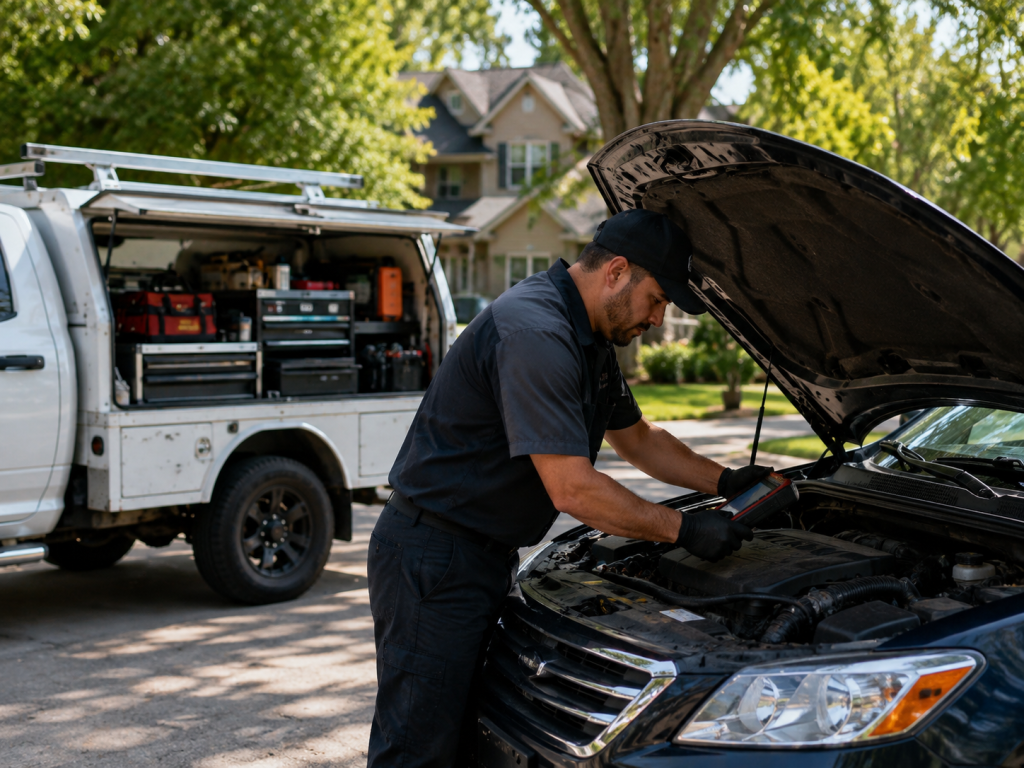
Given how much extra distance many rural Bluegrass commuters already cover, adding a trip into Lexington for a shop appointment is not always convenient, particularly for anyone living well outside the city center. A mobile mechanic can come directly to your home, wherever that happens to be in the surrounding countryside, and inspect struts, shocks, and related suspension components without requiring an additional long drive just to get routine maintenance handled.
We covered the broader benefits of this approach in our article on why mobile mechanics are better than traditional auto shops in Lexington, which explains how convenience and flexible scheduling come together, particularly useful for rural commuters whose daily drive already covers significant distance.
Stay Ahead Of What Rural Kentucky Roads Do To Your Suspension
The Bluegrass region’s rolling hills and rural road conditions are part of what makes this area such a distinctive place to live, but they also mean suspension wear happens differently here than it would for a purely urban commuter. Paying attention to ride quality, unusual noises, and tire wear patterns, and having suspension checked a bit more often than a standard schedule suggests, are simple ways to stay ahead of what a long rural commute demands from your vehicle.
If it has been a while since your suspension was inspected, visit our homepage to learn more about our services, or reach out through our contact us page to schedule a visit at your home anywhere in the greater Lexington area.
A little extra attention now can help your suspension keep up with everything a long Bluegrass commute asks of it every single day.